
Have you ever wondered how quickly you can resolve a legal dispute? The timeframe for a legal claim can be a significant concern for individuals and businesses alike. Understanding the legal claim duration is crucial for planning and navigating the complexities of the legal system.
The process can be lengthy and varies depending on several factors, including the type of claim and the court’s schedule. In this article, we’ll explore the typical legal claim timeline and what you can expect during this process.
Key Takeaways
Table of Contents
- Factors influencing the duration of a legal claim
- Typical stages involved in a legal claim process
- Average timeframe for resolving different types of legal claims
- Tips for managing your expectations during a legal claim
- Importance of understanding the legal claim timeline
Understanding the Legal Claim Process
Understanding the legal claim process is crucial for anyone considering filing a claim. It’s a complex journey, but breaking it down into manageable stages can make it more approachable.
Key Stages in a Legal Claim Journey
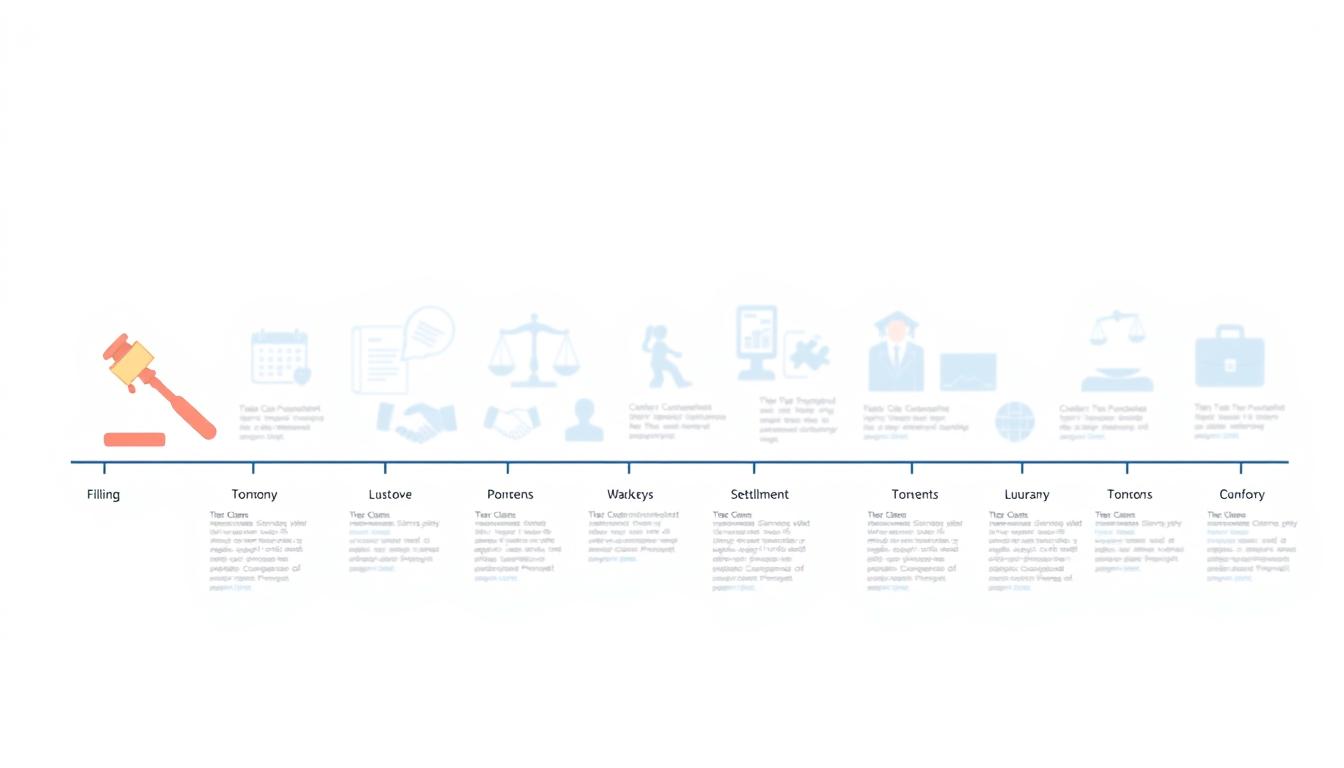
A legal claim typically involves several key stages, from the initial filing to the final resolution. These stages are critical in determining the outcome of your case.
From Initial Filing to Resolution: The Basic Timeline
The timeline of a legal claim can vary significantly based on several factors, including the complexity of the case and the court’s schedule. However, most claims follow a basic structure that includes the pre-filing investigation phase and the discovery and evidence collection stages.
Pre-Filing Investigation Phase
Before a legal claim is officially filed, a thorough investigation is conducted to gather evidence and build a strong case. This phase is crucial as it lays the groundwork for the entire claim.
“A well-prepared case is half won.” –
Discovery and Evidence Collection
During the discovery phase, both parties exchange information and evidence. This stage is vital for understanding the strengths and weaknesses of the case and preparing for potential outcomes.
The discovery phase can be lengthy and may involve depositions, interrogatories, and requests for documents. Effective evidence collection is key to supporting your claim.
| Stage | Description | Typical Duration |
|---|---|---|
| Pre-Filing Investigation | Gathering evidence and building the case | 1-3 months |
| Discovery and Evidence Collection | Exchanging information and evidence between parties | 3-6 months |
Understanding these stages and their typical durations can help set realistic expectations for the legal claim process.
How Long Does a Legal Claim Take? Typical Timeframes
The duration of a legal claim can vary significantly depending on the type of case and several other factors. Different types of legal claims have distinct timeframes for resolution, influenced by their complexity, the legal process involved, and the parties’ actions.

Personal Injury Claims: 6 Months to 3 Years
Personal injury claims typically take anywhere from 6 months to 3 years to resolve. The timeframe can be shorter or longer depending on the severity of the injury, the clarity of liability, and whether the case goes to trial. Simple cases with clear liability and minimal damages can be resolved quickly, often through settlement. In contrast, complex cases involving severe injuries or disputed liability can take longer.
Medical Malpractice Claims: 1 to 5 Years
Medical malpractice claims are often more complex and can take between 1 to 5 years to resolve. These cases require extensive investigation, expert testimony, and sometimes lengthy negotiations. The complexity of medical malpractice cases contributes to their longer resolution timeframe.
Employment Disputes: 8 Months to 3 Years
Employment disputes, including wrongful termination and discrimination cases, typically take between 8 months to 3 years to resolve. The timeframe can vary based on the complexity of the case, the court’s schedule, and whether the parties engage in alternative dispute resolution methods like mediation.
Contract and Business Litigation: 6 Months to 2 Years
Contract and business litigation cases generally take between 6 months to 2 years to resolve. These cases can involve complex financial transactions and contractual obligations, requiring detailed analysis and sometimes extensive discovery. The resolution timeframe can be influenced by the parties’ willingness to negotiate and the court’s backlog.
Understanding these typical timeframes can help individuals and businesses better prepare for the legal process and manage their expectations regarding the duration of their legal claim. The legal claim resolution timeframe and legal claim processing period are critical factors to consider when pursuing or defending against a legal claim.
Factors That Affect Your Legal Claim Duration
Understanding the factors that affect the duration of a legal claim can help manage expectations and prepare for the journey ahead. The length of time it takes to resolve a legal claim is influenced by multiple elements, each playing a significant role in the overall timeline.
Case Complexity and Evidence Requirements
The complexity of a case is a significant factor in determining its duration. Cases involving intricate legal issues or requiring extensive evidence collection can prolong the process. Gathering and analyzing evidence is crucial, and the more complex the evidence, the longer it may take to prepare the case for trial or settlement.
Court Backlog and Jurisdiction Differences
Court backlog is another critical factor that can affect the duration of a legal claim. Courts with heavy caseloads may have longer waiting times for hearings and trials. Additionally, different jurisdictions may have varying procedures and timelines, influencing the overall duration of the claim.
Opposing Party Cooperation and Strategy
The level of cooperation from the opposing party can significantly impact the claim’s duration. Uncooperative defendants or those employing delay tactics can prolong the process. Conversely, a cooperative opposing party can facilitate a smoother and potentially faster resolution.
Your Attorney’s Experience and Approach
The experience and approach of your attorney can also influence the duration of your legal claim. An experienced attorney can navigate the legal system more efficiently, potentially reducing delays and streamlining the process. Their strategy and negotiation skills can also impact how quickly a claim is resolved.
By understanding these factors, individuals can better anticipate the timeframe for their legal claim and work with their attorney to develop a strategy that minimizes delays and achieves a timely resolution.
State-by-State Variations in Legal Claim Timelines
The duration of a legal claim can vary substantially depending on the state in which it’s filed. This variability is due to differences in state laws, court procedures, and the efficiency of the judicial system.
Faster Court Systems
Some states are known for having more efficient court systems, which can significantly reduce the time it takes to resolve a legal claim. For instance:
- Delaware is known for its business-friendly courts and efficient processing of commercial cases.
- Utah has implemented various reforms to speed up its judicial process.
States with Longer Processing Times
Conversely, some states have more congested court systems, leading to longer wait times for claim resolution. Examples include:
- California, where large urban courts often face significant backlogs.
- New York, known for its complex legal landscape and slower court proceedings.

How Statute of Limitations Affects Your Timeline
The statute of limitations is a critical factor in determining how long you have to file a legal claim. This time limit varies by state and type of claim.
Filing Deadlines by Claim Type
Different types of claims have different filing deadlines. For example:
| Claim Type | Typical Statute of Limitations |
|---|---|
| Personal Injury | 2-3 years |
| Medical Malpractice | 1-3 years |
Exceptions and Extensions to Be Aware Of
While statutes of limitations provide a general framework, there are exceptions and potential extensions to be aware of, such as:
- Minority tolling, where the statute of limitations is paused for claimants who are minors.
- Discovery rule, which delays the start of the statute of limitations until the injury is discovered.
Understanding these state-by-state variations and the statute of limitations is crucial for navigating the legal claim process efficiently.
Strategies to Speed Up Your Legal Claim
Speeding up your legal claim requires a combination of preparation, prompt action, and the right approach to dispute resolution. By understanding the factors that influence the duration of a legal claim and implementing effective strategies, you can potentially reduce the time it takes to resolve your case.
Gathering Complete Documentation From Day One
One of the most effective ways to expedite your legal claim is by gathering all necessary documentation from the start. This includes medical records, witness statements, and any other relevant evidence. Having a comprehensive set of documents ready can significantly reduce delays in the process.
Responding Promptly to All Requests and Deadlines
Responding quickly to requests from your attorney and meeting all deadlines is crucial. Delays in responding can slow down the entire process, potentially prolonging the resolution of your claim. Staying on top of communications and obligations can help keep your case moving forward.
Considering Alternative Dispute Resolution Methods
Alternative dispute resolution (ADR) methods, such as mediation and arbitration, can offer a faster route to resolving your legal claim compared to traditional litigation.
Mediation: Potentially Resolving in 1-3 Months
Mediation involves a neutral third-party facilitating a negotiation between the disputing parties to reach a settlement. This process can often be resolved within 1 to 3 months, depending on the complexity of the case and the willingness of the parties to negotiate.
Arbitration: Typically 3-8 Months to Completion
Arbitration is another form of ADR where a neutral arbitrator makes a binding decision after hearing both sides. The duration of arbitration can vary but typically ranges from 3 to 8 months. It’s generally faster than going to trial.
| Resolution Method | Typical Duration | Key Characteristics |
|---|---|---|
| Mediation | 1-3 Months | Negotiation facilitated by a neutral third-party |
| Arbitration | 3-8 Months | Binding decision made by a neutral arbitrator |
| Litigation | 6 Months to Several Years | Traditional court process with potentially lengthy delays |
Conclusion
Understanding the legal claim duration and legal claim processing period is crucial for individuals navigating the complex legal landscape. The journey of a legal claim involves multiple stages, from initial filing to resolution, and various factors can influence the overall timeline.
As discussed, the type of claim, case complexity, court backlog, and opposing party cooperation are just a few elements that can impact the duration of a legal claim. By being aware of these factors and employing strategies to expedite the process, such as gathering complete documentation and considering alternative dispute resolution methods, individuals can better navigate their legal claim journey.
While the legal claim processing period can vary significantly, having a clear understanding of what to expect can help manage expectations and reduce uncertainty. By staying informed and working closely with an experienced attorney, individuals can ensure their legal claim is handled efficiently, ultimately achieving a more timely resolution.
FAQ
What is the average duration of a legal claim?
The average duration of a legal claim can vary significantly depending on the type of claim, case complexity, and jurisdiction. Generally, it can range from several months to several years.
How long does a personal injury claim typically take?
Personal injury claims can take anywhere from 6 months to 3 years to resolve, depending on the severity of the injury and the complexity of the case.
What factors can affect the length of a legal claim?
Several factors can influence the duration of a legal claim, including case complexity, court backlog, opposing party cooperation, and the attorney’s experience and approach.
Can alternative dispute resolution methods speed up my legal claim?
Yes, alternative dispute resolution methods like mediation and arbitration can potentially resolve your claim faster, often within 1-8 months.
How does the statute of limitations impact my legal claim timeline?
The statute of limitations sets a deadline for filing your claim, and failing to meet this deadline can bar your claim. The timeframe varies by state and claim type.
What can I do to help speed up my legal claim process?
Gathering complete documentation from the start, responding promptly to requests, and considering alternative dispute resolution methods can help expedite your claim.
Are there state-by-state variations in legal claim timelines?
Yes, legal claim timelines can vary significantly by state due to differences in court systems, jurisdiction, and statute of limitations.
How long does a medical malpractice claim typically take?
Medical malpractice claims can take anywhere from 1 to 5 years to resolve, depending on the complexity of the case and the jurisdiction.
What is the typical timeframe for employment disputes?
Employment disputes can take anywhere from 8 months to 3 years to resolve, depending on the complexity of the case and the jurisdiction.
How long does contract and business litigation typically take?
Contract and business litigation can take anywhere from 6 months to 2 years to resolve, depending on the complexity of the case and the jurisdiction.